What’s up everyone, and thanks for dropping by—if you’re here, you’re probably either a design engineer sourcing those random metal bits that make your big industrial machines run, or someone who’s just tired of parts that rust, chip, or give out way faster than they should. As a guy who’s been running an industrial ancillary metal parts supplier for 12 years now, I’ve seen it all: guys bringing in parts that looked fine on the drawing but failed within months, projects where we had to scrap entire batches because the surface finish was off by 10 microns, and so many “quick questions” that turned into multi-day deep dives because no one was clear on what they actually needed. Today I’m breaking down the most common surface finish requirements for these parts—no stuffy engineering jargon, just real talk from someone who’s actually shipped these things, not just read about them. Industrial Ancillary Metal Parts
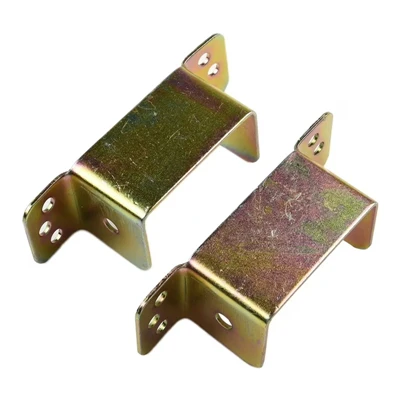
First, let’s get one thing straight: industrial ancillary parts aren’t the fancy chrome trim on a sports car. These are the brackets, sleeves, bushings, fasteners, housing caps, and those tiny little pins that hold conveyor belts together. They live in garages full of dust, food processing plants where they get splashed with cleaning chemicals, mining sites where rocks are slamming into them, and even oil rigs where salt air eats metal alive. Their surface finish isn’t just about looking good—it’s the difference between a part that lasts 6 months and one that lasts 10 years. Let’s start with the big one that almost everyone asks about: corrosion resistance. That’s the #1 requirement I get 7 out of 10 times, and it’s not one-size-fits-all.
Wait, let’s clarify: corrosion resistance isn’t just “paint the part” (though sometimes that’s part of it). For parts that go inside dry factory equipment, a basic zinc plating might work—wait, no, let’s be specific: zinc plating with a trivalent chromate conversion coating, not the old hexavalent stuff that’s getting phased out everywhere. But if that part’s sitting outside, or in a place with high humidity (like a textile factory where steam is constant), you need to amp that up to zinc-nickel plating. That’s the part where we once had a customer who made outdoor farm equipment—he tried zinc plating once, and 3 months later the bolts holding his hay baler were so rusted he couldn’t turn them. Switched to zinc-nickel, they’ve been good for 4 years now. And if it’s food processing? No way. You need passivated stainless steel, not any plating. Plating chemicals can leach into food, so we do that bright, smooth passivation—sand off the free iron on the surface so it doesn’t corrode, meets FDA standards, no exceptions.
Second big one: wear resistance. These parts rub against other parts all day, every day. A bushing that slides inside a pump, a pin that moves a robotic arm’s joint—if the surface is too rough, they’ll wear out in weeks, not years. Here, the surface finish is measured in Ra, right? Wait, Ra is the average roughness, and people throw numbers around like “1.6 Ra” or “0.8 Ra” like it’s nothing, but let’s be real: for most sliding ancillary parts, 0.8 to 1.6 Ra is the sweet spot. Any rougher than that, and friction goes through the roof, the part overheats, wears out fast. Any smoother than that? It’s a waste of money—polishing to 0.2 Ra or lower adds 20% to the cost, and you don’t get any better performance, not for industrial use. I once had a aerospace customer who demanded 0.4 Ra for a tiny pivot pin—turned out they overspent $20k on that order for no reason, because their testing showed 0.8 was just as good. We learned to push back on that kind of over-spec when it doesn’t make sense.
Wait, another thing for wear: sometimes we do surface hardening, like case hardening or nitriding, which also affects finish. Nitriding gives you a hard, wear-resistant layer, and it keeps the Ra low too—no need to polish after, which saves time and money. Case hardening (carburizing) is good for parts that take a lot of impact, like the brackets that hold heavy equipment motors—hard shell, tough core, and if you do it right, the finish doesn’t get too warped, so you don’t have to finish it again.
Third: sealing and compatibility. A lot of ancillary parts are part of a system that needs to hold pressure, or keep contaminants out. For example, a hydraulic fitting sleeve—if the surface finish where the O-ring sits is too rough, the O-ring will tear, leak, and you’ll have a mess on your hands. For O-ring surfaces, the standard is usually 0.4 to 0.8 Ra, and you have to make sure there are no sharp edges, no tool marks that could nick the rubber. We once had a customer in the construction biz who had leaks on their hydraulic cylinders all summer—turns out the machinist had left a tiny burr on the piston’s surface. We fixed the finish, no more leaks. Also, if parts are mating together, like two metal brackets that bolt up, their finish has to be compatible too—if one is too rough, it can gall (seize up) when you tighten the bolts. That’s why we often suggest a phosphate coating for mating surfaces—adds a little lubricity, prevents galling, super cheap.
Then there’s the stuff that’s specific to certain industries, and that’s where you can’t cut corners. Let’s break that down: food and beverage, medical, energy, mining, automotive. For food and beverage, like I said earlier, FDA-approved finishes, no porous surfaces that can trap bacteria. So we passivate stainless steel, sometimes electropolish it—electropolishing makes the surface super smooth, and removes all the tiny crevices where gunk can hide. That’s non-negotiable here. For medical parts, same idea, plus they often need to be sterilized—so the finish has to withstand autoclaving, no plating that can flake off into the body or equipment. We do electropolish for most medical ancillary parts, Ra around 0.5 or lower, and we test every batch for surface contamination.
For energy—whether it’s wind turbines, solar, or oil and gas—corrosion resistance is everything, plus parts have to handle extreme temperatures. Wind turbine blade brackets, for example, are outside 24/7, so they get hot in the sun, cold in winter, rain, snow. We use zinc flake coatings here, not just plating—they’re way more corrosion-resistant than standard zinc, can handle temperature swings from -40F to 300F, and they’re not as brittle as some other coatings. For oil and gas, parts have to handle sour gas, which is super corrosive, so we do a special chrome plating or even alloy steel with a polished finish, no exceptions.
Mining and construction? These are the parts that take a beating. Conveyor belt rollers, bucket pins, the brackets that hold excavator buckets. They don’t care about a shiny finish—they care about not rusting and not wearing out. So we do hard chrome plating here, which is thick, super hard, or sometimes ceramic coatings for parts that get hit with debris. Wait, but hard chrome is getting phased out in some places because of hexavalent chrome, so we switched to tungsten carbide coatings for most mining parts—just as hard, way more corrosion-resistant, and meets all environmental rules.
Now, let’s talk about common mistakes people make with these finishes. First, over-specifying. Like I said earlier, a lot of engineers see a number on a drawing, say 0.2 Ra, and they just put it on everything. That adds cost, lead time, and no benefit. You need to match the finish to the application, not copy what was used on a similar part that’s for a different job. Second, under-specifying. Another big one: a guy sends us a drawing that says “standard finish” and expects a part that lasts 5 years. “Standard” means different things to different people—some think it’s machined finish, which is 3.2 Ra, which is way too rough for a sliding bushing. We always ask for details: where is this part used? What’s it exposed to? Does it rub against other parts? That way we can recommend the right finish, not guess.
Third, not accounting for post-processing. If you’re having a part plated, you have to remember that plating thickness adds to the size, so the finish changes. For example, if you machine a shaft to 10mm, then plate it with 0.02mm of zinc, it’s now 10.04mm, and the surface is a little rougher than the machined finish. So we always tell engineers to account for that in their dimensional tolerances, otherwise the part won’t fit. And if you do any heat treatment, like case hardening, that can warp the part, so you might have to re-machine the surface after, which affects the Ra. That’s why we work with designers early on, not just when the drawing is done—we can catch these issues before they become problems.
Wait, one more thing: aesthetic requirements? Believe it or not, some industrial ancillary parts do need to look good. If you’re making parts for a piece of equipment that’s displayed in a trade show, or sold to a customer who cares about the look, then you need a smooth, consistent finish. No tool marks, no discoloration from plating. For that, we do things like polished stainless steel, or powder coating for non-plated parts—powder coating is durable, comes in any color, and is way cheaper than chrome for aesthetic industrial parts.
Let me give you a real example of how this all comes together. A few months back, a customer called us in a panic. He’s a conveyor manufacturer, and he had a batch of 500 roller brackets that were rusting after 2 months on the job. They were standard machined steel parts, no plating, just left as-machined. We looked at their application: they were going to be used in a food processing plant, near high humidity, and the parts were exposed to occasional water spray. We recommended switching them to 304 stainless steel, passivating them, with a Ra of 1.6 to 3.2 (good for strength, enough to hold the brackets, smooth enough to not catch on the conveyor belt). We shipped the batch in 10 days, he installed them, and 8 months later he called to say none of them had a spot of rust. That’s what we do—we don’t just sell parts, we solve problems.
So to wrap this up, the common surface finish requirements boil down to four core needs: corrosion resistance based on the environment, wear resistance based on how the part moves or rubs, sealing compatibility if it’s part of a hydraulic or pressure system, and industry-specific rules for food, medical, or energy jobs. The biggest mistake you can make is not being specific—don’t just say “corrosion resistant” or “standard finish.” Tell us where the part goes, what it touches, what it has to last through, and we’ll give you the right finish, no overcharging, no under-delivering.
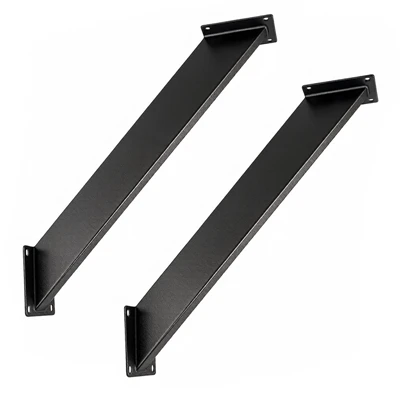
If you’re working on a project right now, whether you need small brackets, pins, bushings, whatever industrial ancillary metal parts, and you’re not sure what surface finish you need, just reach out. No hard sell, no confusing quotes—we’ll walk you through it, tell you what works, what doesn’t, and help you avoid the headaches I’ve seen so many other guys go through. We’ve done parts for everything from tiny robotic joints to 1000-pound conveyor frames, and we know how to get the finish right, on time, on budget.
Industrial Ancillary Metal Parts References
- Metal Finishing Guidebook & Directory. National Association of Metal Finishers, 2022.
- ASME B46.1-2019, Surface Texture (Surface Roughness, Waviness, and Lay). American Society of Mechanical Engineers, 2019.
- FDA 21 CFR Part 175.300, Adhesives for Food Contact Surfaces. U.S. Food and Drug Administration, 2021.
- ISO 12944-6:2018, Paints and Varnishes – Corrosion Protection of Steel Structures by Protective Paint Systems – Part 6: Laboratory Performance Test Methods. International Organization for Standardization, 2018.
- Machining Data Handbook. 5th ed., Society of Manufacturing Engineers, 2020.
Changzhou Detong Metal Products Co., Ltd.
As one of the most professional industrial ancillary metal parts manufacturers and suppliers in China, we also support customized service. Welcome to wholesale bulk high quality industrial ancillary metal parts in stock here from our factory. If you have any enquiry about cooperation, please feel free to email us.
Address: No.2 Xinsheng Road, Henglin Town, Wujin District, Changzhou City, Jiangsu Province
E-mail: detong18@outlook.com
WebSite: https://www.cn-detong.com/
