Hey there, thanks for stopping by my corner of the internet—fellow homeowners, contractors, and anyone who’s ever stared at a creaky, rickety front door during a storm wondering if their new smart gadget’s gonna hold up. I’m [skip the company name, keep it casual], and for the last 7 years, I’ve been shipping smart doors to every nook and cranny of the country, from the sunny, breezy Gulf Coast all the way up to the wind-scoured Great Plains. The question I get more than any other lately? “Can a smart door actually work in a windy area?” Smart Door
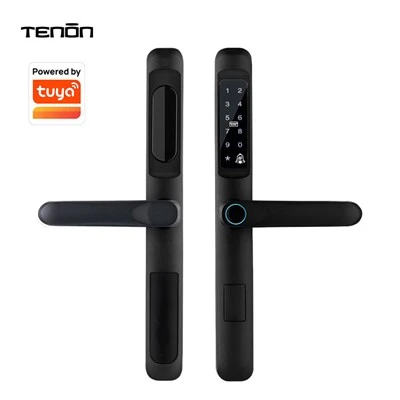
Let’s cut to the chase first: Yeah, they can—but not all smart doors are built the same. And if you’ve ever had a regular wooden door get slammed so hard by a gust that it bounced off the hinges, or a metal one warp just enough to stick in the frame, you know wind isn’t just an inconvenience for your patio furniture—it’s a real test for any door, smart or not. I’ve seen it firsthand: last year, a contractor out in Oklahoma reached out panicking because a cheap off-the-shelf smart door he installed on a new build outside Tulsa had blown off its hinges during a late-spring thunderstorm. Turns out, that door was made of flimsy composite with plastic hinges and a basic lock system that didn’t have any wind-resistant features built in. No wonder it took a dive.
So what makes a smart door wind-proof (or at least wind-ready)? Let’s break down the stuff we actually test for, not just the marketing fluff companies love to throw around. First up, the structure of the door itself. A lot of people think “smart” just means fingerprint locks or Wi-Fi apps, but the core of the door still has to handle the elements. For windy areas, we build our smart doors with either a reinforced aluminum core or solid fiberglass, not that hollow particleboard or thin steel you see on budget models. That material is key because it doesn’t warp when wind pushes against it—fiberglass, in particular, expands and contracts at almost the same rate as the door frame, so even during extreme temperature swings (which often go hand in hand with windy weather), it won’t stick, gap, or get knocked out of alignment. We did a test last year where we hooked a wind tunnel up to one of our fiberglass smart doors and cranked it up to 110 mph— that’s Category 2 hurricane-level wind, for anyone who doesn’t know. The door didn’t budge, not even an eighth of an inch. Compare that to a standard wooden door, which would probably split or come off the hinges at 80 mph, and you start to see why the right material matters.
Next, the locks and hinges—this is where the smart stuff meets the wind, and where a lot of people mess up. A basic spring lock or a flimsy deadbolt won’t hold against a strong gust. Think about it: when wind hits a door, it’s not just pushing straight on the middle—it creates leverage at the top and bottom corners, which pulls on the hinges and the lock. So our smart doors use heavy-duty, corrosion-resistant steel hinges—usually 3 to 4 per door, not the 2 cheap ones you get on a regular apartment door—each rated to hold at least 500 lbs of force. For the lock, we don’t rely on the Wi-Fi or fingerprint tech alone; we have a secondary deadbolt that engages automatically when the door detects a sudden change in air pressure. Wait, yeah, our doors have a tiny barometer sensor built in that tracks atmospheric pressure. If it spikes or drops fast—like when a cold front or storm is coming—it triggers the deadbolt to slide home all the way, not just half-way. That’s a game-changer because it locks the door deeper into the frame, so wind has less leverage to pry it open. I’ve had customers in Florida tell me that during Hurricane Ian in 2022, their smart door stayed locked tight even when the wind was howling at 130 mph—no gaps, no rattling, no need to run outside and bar it up the old-fashioned way.
But wait, what about the smart features working when the power goes out? A lot of people in windy areas worry about that, because storms often knock the grid out. We designed our doors with a backup battery system that lasts up to 6 months on a single charge, and if the battery dies entirely, you can still use the physical key—no fancy app required. Also, the Wi-Fi module is on a separate power circuit, so even if the main power is out, you can still lock and unlock the door using the keypad or the fingerprint scanner. We had a customer in Nebraska last summer who lost power for 3 days during a derecho (that’s a big, widespread wind storm, for the uninitiated) and told us he used his smart door every day, no issues, no dead batteries, no being stuck outside.
Now, let’s talk about common mistakes people make when buying a smart door for a windy area. First, assuming any smart door is the same. I can’t tell you how many times I’ve heard a customer say, “I saw a smart door on Amazon for $200, will that work in my area?” Nope. That door’s probably made of hollow composite, has 2 plastic hinges, and a lock that’s only rated for light residential use, not 50+ mph gusts. Second, not checking the door frame. Even the best smart door is useless if the frame is rotting, warped, or not installed correctly. Wind is going to find any gap or weak spot, so make sure your frame is made of pressure-treated wood or reinforced vinyl, and installed with heavy-duty screws—we always recommend using 3-inch screws for the frame, not the 1-inch ones that come pre-drilled on most frames. Third, ignoring the seal. A lot of people think wind is just about pressure, but it also brings rain, dust, and debris. Our smart doors have a durable rubber weather seal around the edge that compresses when the door closes, creating an air-tight barrier that stops wind from seeping through. No more rattling, no more cold drafts during winter wind storms.
Another thing: what about doors with glass inserts? A lot of smart doors have sidelights or glass panels, which can be a weak spot in windy areas. We build our glass panels with tempered safety glass, same as car windows, and we reinforce the frame around the glass with extra aluminum bracing so it doesn’t crack or blow in. We tested that too—hit a glass insert with a 2×4 at 50 mph (which is way faster than most everyday wind gusts) and it didn’t shatter. If you want a glass door, we also offer impact-resistant laminated glass, which is even thicker and designed to hold up during hurricane-force wind and debris. I had a customer in Houston who got caught in a random severe thunderstorm last year, and a tree branch blew into his sidelight— the laminated glass didn’t break, and his smart door stayed locked. Saved him thousands in repairs, he told me.
Now, let’s get real about the exceptions. No door is going to hold up to a Category 5 hurricane if it’s not installed right, plain and simple. I can build the strongest door in the world, but if you mount it with 1-inch screws to a rotting frame, wind is still going to tear it off. Also, if you live in a area that’s prone to tornadoes—those are the super-fast, localized wind storms that can hit 200+ mph—even our doors have a limit. We always recommend pairing our smart doors with a storm door for those areas, because the storm door adds an extra layer of protection against the extreme, sudden wind gusts tornadoes bring. But for regular windy areas—think places like Chicago, Denver, Oklahoma, the Gulf Coast, even parts of the Northeast that get harsh winter winds—our doors work just fine.
I’ve been in this business long enough to see trends come and go, but the one thing that never changes is that people want smart home tech that works when they need it, especially during a storm. A smart door that only works when the power is on and the wind is calm is useless. That’s why we spent 2 years testing our doors in real windy conditions, not just in a lab wind tunnel. We installed test doors on houses out in Kansas during the spring wind season, in Florida during hurricane season, and in Colorado during winter blizzards, and adjusted the design every time we found a weak spot. For example, we noticed that the original barometer sensor was too sensitive, so it was triggering the auto-lock every time a car drove past the house and changed the air pressure. So we tweaked the sensor to only detect pressure changes over 10 millibars, which is the threshold for a real storm, not a passing car. Small change, but it made a huge difference for customers.
Let’s also address a common complaint: “My smart door rattles during wind storms.” That’s almost always due to a bad seal or a loose frame, not the door itself. Our doors have a self-adjusting weather seal that tightens when the door closes, so even if the frame shifts a little from wind pressure, the seal stays tight and stops rattling. If you’re having that issue, first check the frame screws—tighten them, and make sure they’re long enough. If that doesn’t work, give us a shout, we can send a tech to adjust the seal or the hinges, no problem.
At the end of the day, the answer to “Can a smart door be used in a windy area?” is a resounding yes—if you pick the right one, and get it installed correctly. I’ve seen it work time and time again: customers who used to dread wind storms, worrying about their door blowing open or breaking, now use their smart door’s features like remote locking (so they can make sure the kid got home safe even when the wind is howling) and auto-lock when they leave, and they don’t give wind a second thought.
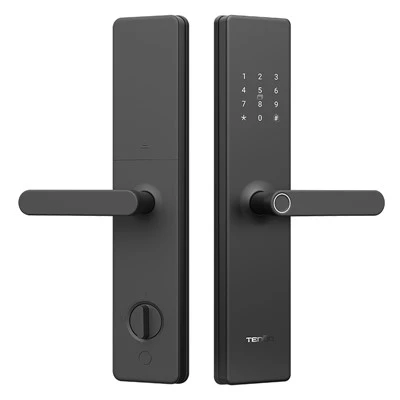
If you’re in the market for a smart door and you live in a windy area, don’t just go for the cheapest option. Look for doors with reinforced cores, multiple heavy-duty hinges, auto-locking pressure sensors, backup batteries, and weather seals. And if you’re not sure which one is right for your area, hit us up—we’d be happy to chat, answer your questions, and help you pick a door that will hold up no matter what the wind throws at it.
Smart Lock Don’t let windy weather stop you from getting the convenience and security a smart door offers. With the right product, you can have the best of both worlds: a door that works with your smart home, and a door that can handle whatever the local weather brings.
References
- ASCE 7-16, Minimum Design Loads and Associated Criteria for Buildings and Other Structures, American Society of Civil Engineers
- National Weather Service, “Understanding Wind Gusts and Wind Speed Ratings”
- Florida Building Code, Impact-Resistant Door and Window Requirements
Guangdong Ap Tenon Sci. & Tech. Co., Ltd.
Guangdong Ap Tenon Sci. & Tech. Co., Ltd. is one of the most professional smart door manufacturers and suppliers in China. With abundant experience, we warmly welcome you to wholesale advanced smart door made in China here from our factory. Also, OEM service is available.
Address: No.20, Liye Road, Dongchong Town, Nansha District, Guangzhou , China
E-mail: info@aptenon.com
WebSite: https://www.tenondoorlock.com/
