Hey there! I’m a supplier of Rs – 232 and 422 cables. I often get asked this question: "Can RS – 422 cable be used for multi – drop communication?" Let’s dig into this topic and find out. Rs-232 and 422 Cable
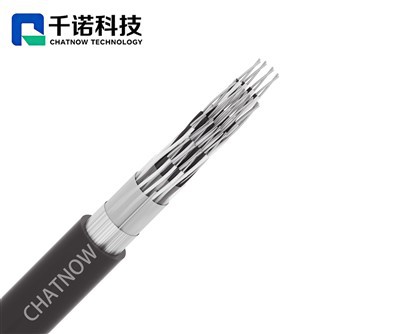
First off, let’s quickly go over what RS – 422 is. RS – 422 is a standard for serial communication, and it’s known for its ability to transmit data over longer distances and at higher speeds compared to some other standards like RS – 232. It’s a differential signaling standard, which means it uses two wires to carry the signal. This differential approach helps in reducing noise and interference, making it ideal for industrial and other harsh environments.
Now, what about multi – drop communication? Multi – drop communication is a setup where multiple devices are connected to a single communication line. In a multi – drop network, one device acts as the master, and the others are slaves. The master controls the communication and can send data to or receive data from the slaves.
So, can RS – 422 cable be used for multi – drop communication? Well, the short answer is yes and no.
RS – 422 is designed primarily for point – to – point communication. In a typical RS – 422 setup, you have one transmitter and one receiver connected by the cable. The reason for this is that the RS – 422 standard assumes that there’s only one device driving the signal on the line at a time. If you try to connect multiple transmitters directly to the same RS – 422 line, you’ll run into problems. When two or more transmitters try to send data at the same time, it can cause signal conflicts, and the data won’t be received correctly.
However, with some modifications and additional hardware, you can use RS – 422 for multi – drop communication. One way to do this is by using a transceiver with a multi – drop capability. These transceivers are designed to manage the communication between multiple devices on the same line. They can handle the switching between different transmitters and receivers, ensuring that only one device is transmitting at a time.
Another option is to use a multiplexer or a hub. A multiplexer can be used to switch the RS – 422 signal between different devices, allowing you to communicate with multiple devices one at a time. A hub, on the other hand, can split the RS – 422 signal to multiple devices, but you still need to ensure that only one device is transmitting at a time to avoid signal conflicts.
Now, let’s talk about the benefits of using RS – 422 for multi – drop communication. One of the biggest advantages is the long – distance communication capability. RS – 422 can transmit data over distances of up to 4000 feet, depending on the data rate. This makes it suitable for applications where the devices are spread out over a large area, such as in industrial automation or security systems.
Another benefit is the high data transfer rate. RS – 422 can support data rates of up to 10 Mbps, which is much higher than some other communication standards. This means you can transfer large amounts of data quickly, which is crucial for applications that require real – time data processing.
However, there are also some challenges when using RS – 422 for multi – drop communication. As I mentioned earlier, managing the communication between multiple devices can be tricky. You need to ensure that only one device is transmitting at a time, otherwise, you’ll get signal conflicts. This requires careful design and implementation of the communication protocol.
Another challenge is the cost. The additional hardware required for multi – drop communication, such as transceivers or multiplexers, can add to the overall cost of the system. You also need to consider the cost of the RS – 422 cables themselves, which can be more expensive than other types of cables.
In my experience as a Rs – 232 and 422 cable supplier, I’ve seen many customers successfully implement RS – 422 for multi – drop communication. They’ve used different approaches, from using transceivers to building custom multiplexer systems. The key is to understand the requirements of your application and choose the right solution.
If you’re planning to use RS – 422 for multi – drop communication, here are some tips. First, make sure you choose the right cable. RS – 422 cables are usually twisted – pair cables, which help in reducing electromagnetic interference. Choose a cable with the right impedance and length for your application.
Second, invest in good quality transceivers or multiplexers. These devices are crucial for managing the communication between multiple devices. Look for devices that have good performance and reliability.
Finally, test your system thoroughly before deploying it. Make sure that the communication between the devices is working correctly and that there are no signal conflicts.
To sum it up, while RS – 422 is designed for point – to – point communication, it can be used for multi – drop communication with the right hardware and setup. It offers many benefits, such as long – distance communication and high data transfer rates, but it also comes with some challenges.

If you’re interested in using RS – 422 cables for your multi – drop communication needs, or if you have any questions about our Rs – 232 and 422 cables, feel free to reach out. We’re here to help you find the right solution for your application. Contact us for more information and to start a procurement discussion.
Security and Sound References
- "Serial Communication Handbook"
- Technical documentation from RS – 422 transceiver manufacturers
Zhejiang Chatnow New Material Technology Co., Ltd.
Zhejiang Chatnow New Material Technology Co., Ltd. is well-known as one of the leading rs-232 and 422 cable manufacturers and suppliers in China, specialized in providing high quality customized service. Please feel free to wholesale high-grade rs-232 and 422 cable at competitive price from our factory.
Address: Building 12, No.9 Huajin Road, ZhouWangMiao Town Innovation Center, Haining, Zhejiang 314400
E-mail: info@chatnow-cable.com
WebSite: https://www.chatnow-cable.com/
