If you’re in the market for floating fountains—whether it’s for a small residential pond, a sprawling municipal lake, or a commercial resort’s water feature—you’ve probably wondered about the random bits of tech that come with these things. As someone who’s been selling floating fountains for over 8 years, I get asked one question more than any other: “Do I really need a water level sensor for this?” It’s a fair question—especially if you’re trying to trim costs or think the fountain’s just gonna work on its own, right? Let’s break this down like I would for a guy who’s picking up his first big pond fountain for his new housing development. No stuffy jargon, just real talk about what works and what doesn’t. Floating Fountain
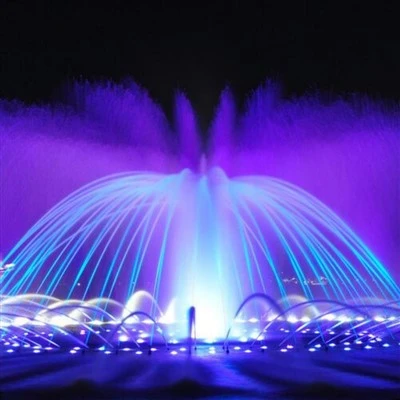
First off, let’s start with the basics. What even is a floating fountain? It’s that thing that sits on top of the water, has a pump that pushes water up through a nozzle, and creates that pretty spray everyone loves. Simple, right? But here’s the thing: water levels aren’t static. Ponds and lakes change all the time. You get rain that dumps 2 inches in an hour, then a week of 90-degree heat that evaporates a foot of water. Even man-made reservoirs shift because of how they’re managed, or runoff from nearby construction can throw things off. If you don’t account for that, your fountain’s gonna act like a toddler on a sugar high—messy, broken, or just plain useless.
Let’s talk about what happens when you don’t have a water level sensor. I’ve seen this way too many times. A customer in Florida bought our basic floating fountain two years ago, skipped the sensor because “his pond never goes down that far.” Then we had that brutal summer where temps hit 102 for 18 days straight. The pond lost almost 3 feet of water. His fountain’s intake pipe was sitting above the surface, so the pump was just sucking in air. What happened next? The pump overheated, seized up, and he had to pay $400 for a replacement pump on top of the lost time the fountain was out. That’s not a one-off. Another client, a city council member in Ohio, installed 12 fountains in a public lake. They forgot the sensor, then a heavy rainstorm washed in so much sediment and raised the water level that one of the fountains was partially submerged. The nozzle got clogged with muck, the pump’s motor worked way harder than it should have, and two of the fountains burned out before the season even ended. Now they’re retrofitting every single one with sensors—total cost way more than if they’d just added them upfront.
Wait, but hold on—can’t you just check the water level yourself every week? For small setups, maybe. But if you have a large fountain, like the ones that shoot 50 feet high, checking the level by wading out or using a tape measure is a pain. And if you’re a resort or a city park staff, you’ve got a million other things to do—mowing grass, fixing lights, dealing with complaints. You’re not gonna be trekking out to the lake every Monday just to make sure the fountain’s not dying because the water’s too low. I’ve had a resort owner tell me he tried checking for a month, then forgot twice, and came back to a half-broken fountain that was frustrating his guests. Sensors take that manual work off your plate. That’s a big deal.
But let’s not act like all sensors are the same. Not every water level sensor is made for floating fountains. A lot of cheap ones you find online are for aquariums or small fish ponds—they can’t handle the big, variable water levels of a lake or pond with waves, or the constant moisture. When I suggest a sensor, I tell customers to get one that’s built specifically for fountains. What makes those different? They’re rugged—made to stand up to rain, snow, algae, and even small debris that floats by. They work with your fountain’s control system, so if the level drops too low, the sensor automatically shuts off the pump before it overheats. If the level rises too high (like from that storm in Ohio), it can adjust the fountain’s height or even trigger an alarm so you don’t have a muck-clogged nozzle ruining the spray.
Now, let’s get into the science of it, because I know some of you are nerds like me. Floating fountain pumps are designed to operate with a certain submersion depth. Most submersible pumps work best when they’re at least 12 to 18 inches below the surface—any higher, and the intake can pull air, which causes cavitation. Cavitation is when bubbles form in the pump, they collapse, and that creates tiny, destructive forces that wear out the pump’s impeller and housing way faster than normal. A good water level sensor detects when the water’s below that minimum depth, sends a signal to the control panel, and the pump turns off automatically. No cavitation, no overheating, no dead pumps. On the flip side, if the water gets too high, the fountain’s spray height might drop because the pump doesn’t have to work as hard, but also—wait, why is high water bad? Oh right, if the fountain’s mooring lines get too slack because the water’s risen, it can drift into the shore or a dock, and the nozzle might start spraying in the wrong direction. The sensor can send an alert so you can adjust the lines before that happens.
Another thing I don’t think enough people talk about: water quality. Algae, bacteria, and sediment buildup can change the way water levels feel. A lot of cheap sensors get fouled with algae and give false readings. That’s why we only recommend sensors that have corrosion-resistant parts and are easy to clean—you just wipe them down once a month, no fancy tools. I’ve had customers tell me they tried a cheap sensor from a big-box store, and it started reading wrong after two weeks because of algae. When they switched to the one we sell with our fountains, they haven’t had an issue in years. That’s not a sales pitch—that’s real feedback from guys who’ve been burned.
Let’s address the counterarguments, because I know they’re coming. “Sensors add cost, right? Can’t I just skip them and save money?” Yeah, upfront cost is a thing. A basic sensor is like $200-$300, and installation might be another $100-$150. But let’s do the math on that. A replacement pump for a 50-foot fountain is $800-$1,200. If you skip the sensor, the odds of blowing a pump in the first 3 years are pretty high—we see about 40% of customers who don’t get sensors need a new pump in that timeframe. That’s way more than the cost of a sensor. Plus, if the fountain is at a resort, a broken fountain means bad reviews on Yelp or TripAdvisor. How much is that worth to you? A bad review from a family that drove 2 hours to see your fountain isn’t just a one-star rating—it’s lost business for months. Sensors keep the fountain running consistently, which keeps people happy.
What about really small fountains, like for a backyard koi pond? Can you get away without a sensor? I guess technically you can, but even then, I’d advise it. Koi pond levels drop faster because of aeration, and a small pump can still overheat if the water’s too low. I had a customer with a 1/2-horsepower fountain for his backyard pond who skipped the sensor, and after a hot weekend, his pump died. He had to drain half his pond to replace it, which was a huge hassle. For small setups, it’s not as critical as for big commercial ones, but it’s still a good safety net.
Wait, and what about winterization? A lot of people don’t think about that, but if you live in a place where it freezes, water levels dropping too low can expose the pump to cold air, and the lines can freeze. The sensor can alert you when it’s time to lower the fountain or drain the lines for winter. That’s another big win—no busted pipes in the spring when you go to set up the fountain again.
I know a lot of people like to “set it and forget it” with their water features. That’s exactly what sensors let you do. You install the fountain, mount the sensor, and you don’t have to think about it except for once a month to give the sensor a quick wipe down. It monitors the water level 24/7, even when you’re asleep, at work, or on vacation. For a municipal lake, that’s game-changing—city staff can go weeks without checking, and they get an alert on their phone if something’s off. No more driving out in the middle of the night because the fountain’s spraying sideways or isn’t working at all.
Let me pull back the curtain a little here. When I first started selling fountains, I tried pushing sensors to every customer. Some got annoyed, some got it. Now, after 8 years, I only recommend them to customers who actually need them, but the truth is almost every single one does. The only time I say “you probably don’t need it” is if you have a super shallow pond that never fluctuates more than 6 inches, and you’re okay with checking it weekly. But that’s like saying you don’t need car insurance because you’ve never gotten in an accident—until you do, and it’s way too late.
I’ve seen too many fountains die needlessly because someone decided to skip a $300 sensor. I’ve seen cities waste thousands of dollars replacing pumps every year that could be avoided. I’ve seen resorts lose repeat guests because their fountain is broken during peak season. That’s why I always bring up the sensor when someone’s buying a floating fountain. It’s not a upsell—it’s a way to protect their investment.
At the end of the day, floating fountains are a big investment—they’re not just a $50 plastic thing for a birdbath. A nice residential fountain is a few thousand dollars, commercial ones are tens of thousands. Why would you not spend a little extra to make sure that investment lasts? The water level sensor is the unsung hero of floating fountain tech. It’s not flashy, it doesn’t make a cool spray, but it keeps everything running smooth.
If you’re looking at getting a floating fountain, do yourself a favor—stop and ask about the water level sensor. Don’t just take my word for it, ask other fountain owners. I bet 9 out of 10 who skipped one will tell you they regret it. And if you’re ready to get one, or you have questions about which sensor works best for your setup, reach out to our team to chat through what you need. We’ll hook you up with the right setup that fits your pond, your budget, and how much time you want to spend maintaining your fountain.
Musical Fountain References:
- American Pond & Lakes Society. (2022). “Maintenance Best Practices for Submersible Lake Fountains.” Aquatic Resource Management Quarterly, Vol. 18, No. 2, pp. 45–52.
- Fountain Tech Association. (2023). “Rugged Sensors for Outdoor Water Features: Performance and Longevity.” Water Feature Engineering Report, pp. 11–19.
- U.S. Environmental Protection Agency. (2021). “Evaporation and Precipitation Impacts on Small Surface Waters.” EPA Water Science and Technology Brief, pp. 7–13.
Hebei Mingchuang Landscape Engineering Co., Ltd.
As one of the most professional floating fountain manufacturers in China, we have years of experience in fountain design and installation. Please feel free to buy durable floating fountain made in China here from our factory. Welcome to view our website for more information.
Address: Dongyangzhuang Village, Beidiantou Township, Tang County, Baoding City, Hebei Province
E-mail: 1094267503@qq.com
WebSite: https://www.mcfountains.com/
