If you’re a facility engineer, plant manager, or someone who sources critical flow control components, you already know that pneumatic valve actuators aren’t one-size-fits-all. Working as a pneumatic valve actuator supplier for over a decade, I’ve fielded hundreds of calls from buyers panicking because they ordered the wrong actuator—one that doesn’t meet industry standards for their refinery, water treatment plant, or pharmaceutical manufacturing line. The number one way to avoid that costly mistake? Prioritizing relevant certifications before you even place an order. In this post, I’ll break down exactly what certifications you need, why each matters, and how to verify that any actuator you’re considering (including the ones we supply) is actually compliant—no hidden fine print, no misleading marketing jargon. Pneumatic Valve Actuator

Let’s start with the basics: what even is a relevant certification for pneumatic valve actuators? It’s not just a random stamp someone puts on a product to make it look credible. Certifications mean a third-party, independent testing body has verified that the actuator performs as claimed, meets strict safety requirements, and aligns with global or regional industry rules. For example, an actuator that works fine for a residential sprinkler system won’t cut it for a chemical plant handling corrosive materials or high-pressure gases. The certifications are there to protect you, your team, and your operations from failures that could lead to downtime, safety hazards, or even regulatory fines.
First on the list, and non-negotiable for most industrial applications, is ISO 5208. Wait, don’t tune out yet—let me explain why this one matters more than any other for actuator performance. ISO 5208 is the international standard for testing the tightness of valve actuators, specifically their ability to hold pressure without leaking. Think about it: if an actuator controls flow for a high-pressure steam line or a process handling volatile organic compounds (VOCs), even a tiny leak can turn into a major problem. ISO 5208 sets clear test criteria for both pneumatic and hydraulic actuators, measuring external leaks, internal leaks, and the integrity of the actuator’s seals. When we ship an actuator that’s marked ISO 5208 compliant, we don’t just self-certify—we provide a test report from an accredited lab showing exactly how it performed under pressure. I once had a customer in a food processing plant tell me they saved $20,000 in lost product and cleanup costs last year because their ISO 5208-certified actuator didn’t leak during a routine shutdown. If you skip this certification, you’re essentially gambling with your process.
Next, depending on where your facility is located or what industry you operate in, you’ll need pressure equipment directives (PED) or ASME certifications. For European Union-based operations, the PED (Directive 2014/68/EU) is mandatory for any equipment that handles pressures over 0.5 bar. PED certification ensures that the actuator is designed, manufactured, and tested to withstand the pressures and temperatures it’s rated for, with strict quality control protocols throughout the production process. For North American buyers, ASME (American Society of Mechanical Engineers) certifications—specifically ASME B31.1 for power piping and ASME B31.3 for process piping—are key. These standards outline requirements for components used in specific piping systems, so an actuator for a refinery will need ASME B31.3 compliance, while one for a power plant will need ASME B31.1. I can’t tell you how many times I’ve seen buyers accept an actuator without checking which ASME code applies, only to have their inspection team reject it during a scheduled audit. It’s a avoidable headache.
If you work in industries where safety is the top priority—pharmaceuticals, biotech, or food and beverage—you’ll need to look at FDA and 3-A Sanitary Standards certifications. FDA certification, specifically Title 21 CFR Part 177, covers materials that come into contact with food, drugs, or other consumables. It ensures that the actuator’s wetted parts (the parts that touch the process fluid) are non-toxic, corrosion-resistant, and won’t leach any harmful substances. For hygienic applications, 3-A Sanitary Standards go a step further, setting rules for surface finish, crevice design, and cleanability. 3-A certified actuators can be safely cleaned with CIP (Clean-in-Place) systems, which is non-negotiable for pharmaceutical lines where cross-contamination is a major risk. A customer of ours in a vaccine manufacturing plant switched to our 3-A certified actuators two years ago, and since then, they’ve eliminated 90% of the validation issues they used to have with older, non-certified units. That’s not just a certification—it’s a productivity driver.
For facilities located in regions with harsh climates or extreme operating conditions—think arctic mines or coastal chemical plants where salt air causes corrosion—IP ratings are a must. IP (Ingress Protection) certifications, set by IEC 60529, tell you how well the actuator’s enclosure is protected against solids and liquids. The first number in the IP rating is for solids (0 = no protection, 6 = dust-tight), and the second is for liquids (0 = no protection, 9 = protection against high-temperature, high-pressure water jets). For example, an actuator for an offshore oil rig will need an IP67 rating, which means it’s dust-tight and can withstand being submerged in up to 1 meter of water for 30 minutes. An actuator for a food processing plant that uses high-pressure washdowns will need IP66, which protects against powerful water jets. I always advise buyers to ask for the full IP test report, not just the rating number, because some manufacturers inflate their IP claims without proper testing.
Another critical certification, especially for actuators used in safety instrumented systems (SIS), is SIL (Safety Integrity Level) per IEC 61508. SIL is a scale from 1 to 4 that measures the reliability of a safety function—higher SIL means lower risk of failure. If your actuator is part of a system that shuts down a process in an emergency (like a pressure relief valve), you need a SIL-rated actuator. For example, a SIL 2 rated actuator has a 1 in 1,000 chance of failing to perform its safety function on demand, while SIL 3 is 1 in 10,000. SIL certification isn’t just about the actuator itself—it covers the entire manufacturing process, quality management system, and design reviews. We supply SIL-rated actuators that have been tested and validated by third-party labs to meet IEC 61508 requirements, and we work closely with our customers to document the safety function so they can pass their own audits.
Now, the big question: how do you actually verify these certifications? I can’t stress this enough—don’t take the manufacturer’s word for it. Too many suppliers put a generic “certified” sticker on products that haven’t actually been tested. Here’s my step-by-step process for verifying certifications, which I’ve used with every customer for over a decade. First, ask for the full, unredacted test report from an accredited certification body. Accreditation bodies like ANSI (American National Standards Institute) in the US, UKAS (United Kingdom Accreditation Service) in the UK, and IAS (International Accreditation Service) globally have strict rules for certifying labs, so make sure the test report is from an accredited body. Second, cross-reference the certification number with the accrediting body’s database. Most organizations let you look up certifications online—for example, UKAS has a public database where you can enter a certification number to confirm it’s valid. Third, ask for a sample of the certification document, not just a photo from the supplier’s website. Some suppliers will use a photo of a generic ISO stamp and apply it to every product, regardless of whether it’s actually been tested. Fourth, if you’re working with a local supplier, ask for references from other customers in the same industry. A reputable supplier will be happy to connect you with a plant manager who can confirm they’ve used their certified actuators without issues.
Let’s also talk about common mistakes buyers make when seeking certifications. The first is chasing too many certifications that don’t apply to their use case. For example, a small water treatment plant handling non-potable water doesn’t need a SIL 3 rated actuator—SIL 2 would be more than enough, and it would save you money. The second mistake is assuming that a certification for a different component applies to actuators. For example, a valve might have a 3-A certification, but the actuator attached to it might not. You need to verify the actuator’s own certifications, not just the valve’s. The third mistake is waiting until the last minute to check certifications. Many projects have tight timelines, but ordering a non-certified actuator because you’re in a hurry will only lead to delays when your inspection team rejects it. I always advise customers to confirm certifications early in the sourcing process, so if there’s a discrepancy, you have time to adjust.
As a pneumatic valve actuator supplier, I’ve seen firsthand how much of a difference the right certifications make. Last year, we worked with a mining operation in Canada that had been experiencing frequent actuator failures because they were using uncertified units that couldn’t handle the cold temperatures and high pressure of their process. We supplied them with IP67, PED-compliant actuators that were also tested to withstand temperatures as low as -40°C. Six months later, they called to say they hadn’t had a single failure, saving them over $50,000 in downtime costs. That’s the impact of proper certifications—not just a stamp, but real performance, safety, and cost savings.
If you’re currently sourcing pneumatic valve actuators and want to make sure you’re getting the right certified units for your application, don’t hesitate to reach out. We can provide full test reports, walk you through which certifications you need based on your industry and process, and work with you to customize actuators to meet your specific requirements. Whether you’re a plant in the EU needing PED compliance, a biotech facility needing 3-A certification, or a power plant needing ASME B31.1, we have the expertise and products to meet your needs. We’ll never sell you a product that isn’t properly certified, and we’ll be transparent about every test and standard that applies.
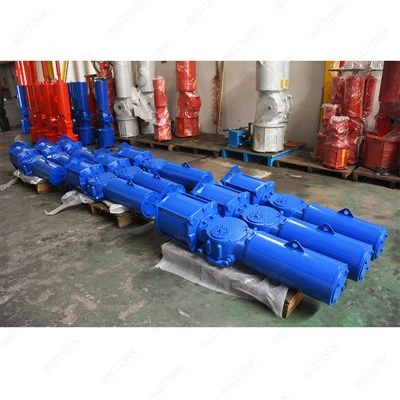
Now, before I wrap this up, let’s recap the key certifications to remember: ISO 5208 for pressure tightness, PED/ASME codes for regional and piping system compliance, FDA/3-A for hygienic applications, IP ratings for environmental protection, and SIL for safety instrumented systems. Always verify certifications independently, don’t settle for generic claims, and start the process early in your sourcing. Investing in certified pneumatic valve actuators isn’t just a regulatory requirement—it’s an investment in your operations’ safety, reliability, and bottom line.
Scotch Yoke Actuator References
ISO 5208: Industrial valves – Pressure testing of metallic valves
Directive 2014/68/EU (PED): Pressure Equipment Directive
ASME B31.1: Power Piping
ASME B31.3: Process Piping
Title 21 CFR Part 177: Food and Drug Administration (FDA) regulations for food contact materials
3-A Sanitary Standards for Pneumatic Actuators, Standard 600-20
IEC 60529: Degrees of protection provided by enclosures (IP Code)
IEC 61508: Functional safety of electrical/electronic/programmable electronic safety-related systems
Zhejiang Bigtork Valve Automation Co., Ltd.
Zhejiang Bigtork Valve Automation Co., Ltd. is one of the leading pneumatic valve actuator manufacturers and suppliers in China. We warmly welcome you to buy customized pneumatic valve actuator at competitive price from our factory. Contact us for more details.
Address: 98 Yuanqu Avenue,Anfeng Industrial Zone,Oubei,Yongjia,Zhejiang,China.
E-mail: sales@bigtork.com
WebSite: https://www.bigtork.com/
