If you’ve ever walked through a manufacturing floor, you know the hum of machinery, the clank of metal parts, and the quick, intentional movements of workers who’ve spent years refining their craft. What you might not hear—unless you’ve spent time in the safety space—is the quiet conversation around a question that keeps me up at night, as a supplier of safe manufacturing equipment: Are the investments we make in tools like guardrails, pressure sensors, and automated lockout-tagout (LOTO) systems actually worth it? Safe Manufacturing Equipment

For years, many manufacturing operators viewed safety equipment as a necessary burden, a line item on a balance sheet that didn’t contribute to productivity or profit margins. But over the past decade, that narrative has shifted dramatically—driven as much by hard data as by stories of workers who didn’t return home to their families after a shift. Today, cost-effectiveness in manufacturing safety isn’t just about avoiding fines or lawsuits; it’s about protecting your most valuable resource (your people), reducing downtime, and building a culture of reliability that sticks. Let’s break down what that looks like, based on the conversations I’ve had with plant managers across North America, and the real-world numbers that back every decision we make as an equipment supplier.
First, let’s get one myth out of the way: “Safety costs too much.” The Bureau of Labor Statistics (BLS) has tracked workplace injuries in private industry for decades, and 2022 data shows that non-fatal occupational injuries and illnesses in manufacturing cost employers an average of $43,000 per incident. That number includes workers’ compensation, lost productivity, overtime for covering shifts, regulatory fines, and even long-term disability costs that stretch for years. For context, a standard set of machine safety guardrails for a mid-sized stamping press—one of the most common pieces of equipment involved in crush injuries—costs around $2,500. That’s a one-time investment that prevents a single incident costing 17 times that amount. When you scale that to a plant with 20 presses, that’s $50,000 total for guardrails, versus avoiding $860,000 in potential incident costs. The math isn’t even close.
But it’s not just catastrophic injuries that add up. Minor, repetitive motion injuries like carpal tunnel syndrome, which are common in manufacturing assembly lines, have an average cost of $22,000 per case, according to the National Safety Council (NSC). These injuries don’t make headline news, but they create hidden downtime: a worker out for two weeks means overtime for their teammates, delayed order timelines, and the cost of retraining a temporary worker. We recently worked with an automotive parts plant in Detroit that was dealing with 12 repetitive motion injuries a year on their assembly lines. They installed our ergonomic lifting aids—simple, motorized tools that reduce the force workers exert when lifting heavy components—for a total of $38,000 across three lines. In the year after installation, they had zero new repetitive motion injuries, saved $264,000 in direct and indirect injury costs, and actually increased production output by 3% because workers weren’t fatigued at the end of shifts. That’s the kind of return on investment (ROI) that makes plant managers lean in and ask for more.
Another often-overlooked cost of unaddressed safety gaps is regulatory fines. The Occupational Safety and Health Administration (OSHA) issues fines that start at $15,625 for serious violations and jump to $156,259 for willful or repeated violations. A 2023 OSHA report found that manufacturing had the highest number of serious violations of any industry, with an average fine per violation of $10,000. Last year, a metal fabrication plant in Ohio I’d been working with got fined $125,000 for a single willful violation of failing to install proper machine guarding. The plant’s management told me afterward that investing in full guarding across all 15 of their CNC machines would have cost $45,000—less than half the fine, and a one-time cost that would have eliminated that violation entirely. What’s more, OSHA now prioritizes follow-up inspections for plants with previous violations, so a single missed safety step can lead to years of costly audits and scrutiny.
Now, let’s talk about the productivity wins that come with safe equipment, because that’s the piece that surprises a lot of operators. When workers have the right tools to do their jobs safely, they’re not just less likely to get hurt—they’re more engaged and efficient. I remember a conversation with a plant manager in Texas who made the switch to our automated LOTO systems a few years ago. Before that, their workers were using manual LOTO locks, a time-consuming process that took 20 minutes per machine when it needed maintenance. The automated system cut that time to 2 minutes, while also ensuring that no worker could accidentally start a machine while someone was inside performing repairs. The result? The plant’s maintenance team was able to complete 30% more machine servicing each month, which reduced unplanned downtime by 18% overall. That’s a direct, bottom-line gain from safety equipment that doesn’t show up on injury reports—it shows up in monthly profit margins.
Of course, I’m not saying every piece of safety equipment is a home run. There are pitfalls that can make a safety investment feel wasteful, and that’s where our team at Safe Manufacturing Equipment comes in. For example, we once had a customer who bought a set of pressure sensors for their packaging line, thinking more sensors would mean better safety. But they didn’t adjust their worker training to match the new equipment, so workers still took unnecessary risks around the line, and the sensors ended up being an expensive add-on that didn’t deliver results. That’s why we don’t just sell equipment—we work with customers to do a full safety audit of their plant, identify high-risk areas, and build a custom solution that fits their specific workflow, not just a one-size-fits-all product.
Another pitfall is choosing cheap, low-quality safety equipment to save up front. A coworker of mine in the industry recently told me about a food processing plant that bought $1,000 guarding kits from a no-name supplier instead of our $3,500 stainless steel guards (specifically designed for washdown environments). Within six months, the cheap guards had rusted and cracked from constant cleaning, leaving gaps where workers could reach into mixing vats, and the plant had to replace all of them anyway—on top of a near-miss incident where a worker’s glove got caught in a partially exposed mixer. Total cost: $12,000 for new guards, plus $8,000 in near-miss investigation and training. It’s a classic case of “penny wise, pound foolish” that we see far too often. The most cost-effective safety equipment isn’t the cheapest—it’s the durable, tested equipment that’s built for your plant’s unique conditions, paired with training that helps workers actually use it.
Long-term, the cost-effectiveness of safe manufacturing equipment goes beyond immediate numbers. It’s about retention. The manufacturing industry has a turnover rate of 57% for production workers, according to the National Association of Manufacturers (NAM), and one of the top reasons workers leave is unsafe working conditions. Replacing a production worker costs an average of 1.5 times their annual salary, according to the Society for Human Resource Management (SHRM). That means a plant with 100 workers and 57 turnovers a year is spending millions on hiring and training. When you invest in equipment that makes workers feel safe, you reduce turnover. We had a customer in Indiana who installed our line guards and ergonomic workstations in 2021; their production worker turnover dropped from 62% that year to 28% in 2023. That saved them over $1.2 million in recruitment and training costs—more than enough to cover the cost of all the safety equipment they’d put in over three years.
Let’s also address the elephant in the room: small and mid-sized manufacturers (SMMs), who often have tighter budgets than large corporations. I know many SMM owners who look at safety equipment and think, “We can’t afford this right now.” But I’ve seen too many SMMs go out of business after a single major injury incident or OSHA fine. For example, a small custom woodworking shop in Pennsylvania that we worked with a few years ago had a worker lose a finger in a table saw that lacked a proper guard. The shop paid over $200,000 in workers’ comp, lawsuit fees, and OSHA fines—money they didn’t have, and enough to shut down operations temporarily, costing them long-term contracts. A basic saw guard for that table saw costs $150, and a set of training for the three workers cost $300. Total: $450, versus $200,000 in loss. For SMMs, safety equipment isn’t a luxury—it’s a survival tool.
At the end of the day, every safety investment is a bet on two things: your workers and your business. When you choose reliable, custom-fit safety equipment, you’re betting that your workers will show up to their shifts ready to do their best, not worried about getting hurt. You’re betting that your production lines will run smoothly, with less downtime and fewer disruptions. You’re betting that your business will be more profitable, with lower long-term costs and higher retention. And from where I sit, after 12 years in this industry, that bet almost always pays off.
I don’t just say this as a supplier— I say this as someone who has sat across from plant managers who’ve lost a worker to an avoidable injury, who’ve watched SMMs struggle to recover from fines, and who’ve celebrated with teams that installed the right equipment and saw their profit margins go up while keeping their people safe. If you’re in a position where you’re weighing the cost of new safety equipment against short-term budgets, I’d encourage you to take a step back and look at the full picture. The cost of not investing in safe manufacturing equipment is almost always far higher than the cost of investing in it.
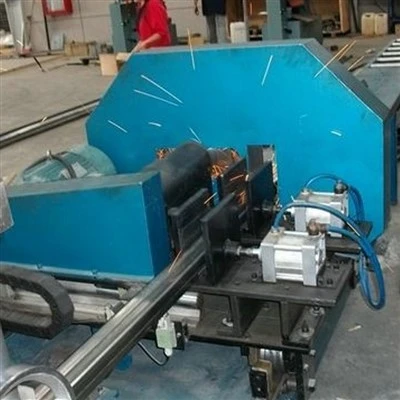
If you’re ready to talk about what that looks like for your plant—whether you’re a small woodworking shop or a large automotive facility—we’re here to help. We don’t push products that don’t fit your needs, and we don’t believe in one-size-fits-all solutions. Let’s do a free, no-obligation walkthrough of your plant, talk about your highest-risk areas, and build a plan that works for your budget and your goals.
Electrical Cabinet Profile Production Line References:
Bureau of Labor Statistics. (2022). Nonfatal Occupational Injuries and Illnesses Requiring Days Away from Work, 2022. U.S. Department of Labor.
National Safety Council. (2023). The Cost of Workplace Injuries and Illnesses. National Safety Council.
Occupational Safety and Health Administration. (2023). OSHA Violation Cost Data: Fiscal Year 2023. U.S. Department of Labor.
National Association of Manufacturers. (2023). Manufacturing Workforce Turnover Report. National Association of Manufacturers.
Society for Human Resource Management. (2022). Cost of Employee Turnover. Society for Human Resource Management.
Weifang Yue Jun Machinery Co., Ltd.
With abundant experience, we are one of the most professional safe manufacturing equipment manufacturers in China. We warmly welcome you to buy durable safe manufacturing equipment made in China here from our factory. We also accept customized orders.
Address: Kuiwen District, Weifang City, Shandong Province
E-mail: adrian@yuejunmachinery.com
WebSite: https://www.yuejunmachinery.com/
